Ankle-Length Leggings Stop Working on the First Cold Morning — Here's the Fix
Quick Answer: The ankle gap works in warm weather and fails below roughly 60°F because ankles have very little insulating tissue and a lot of surface blood flow — you lose heat there disproportionately. The fix isn’t a longer legging. It’s closing the gap with the right sock height, choosing a heavier fabric in the same length, or layering so the gap becomes intentional rather than accidental.
All summer the ankle-length pair was the correct choice. Cropped just above the bone, sneakers, done.
Then one morning in September you walk out and your ankles are specifically, distractingly cold — not your legs, your ankles — and the outfit you’ve worn fifty times suddenly reads as a mistake.
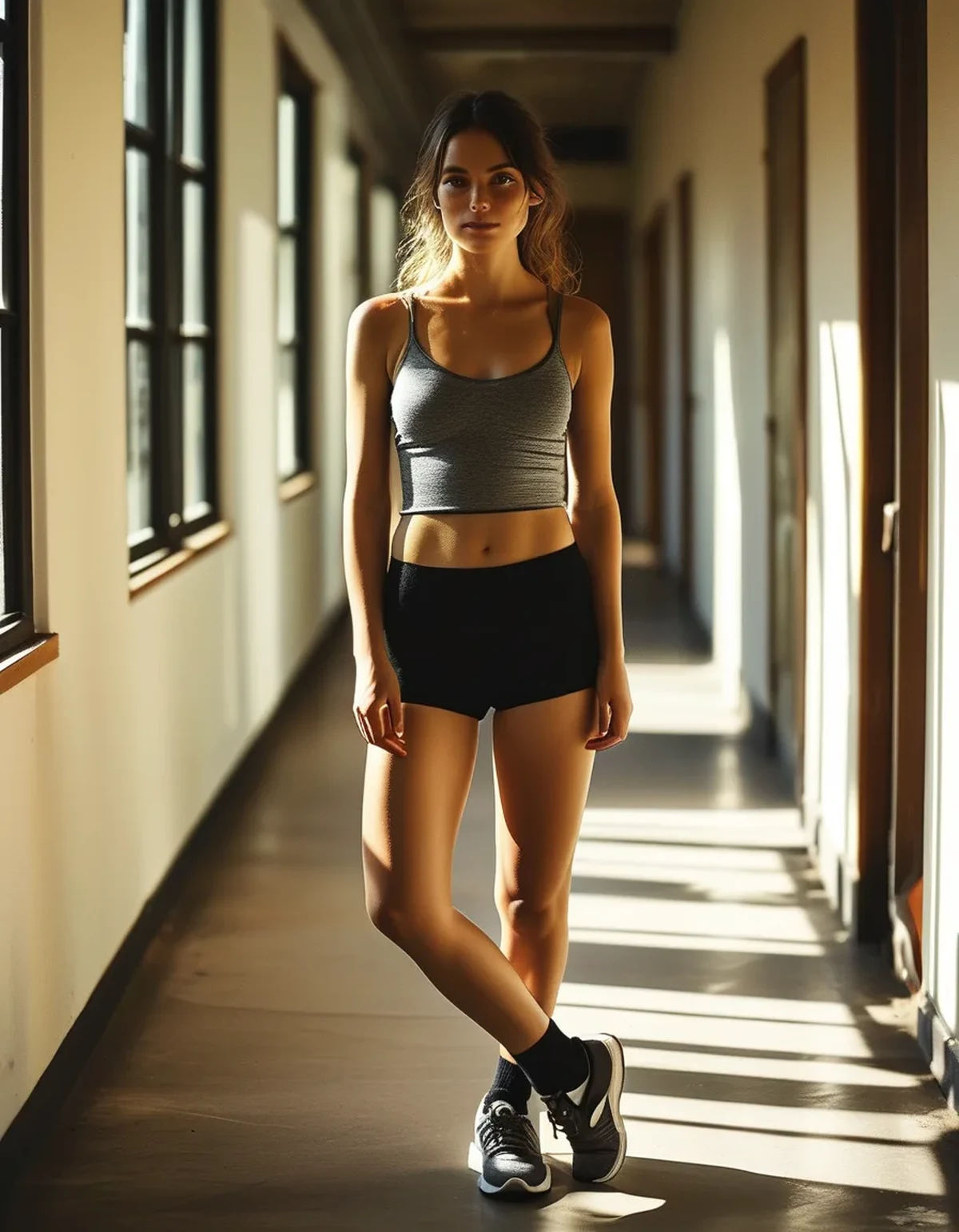
Why do ankles get cold so much faster than the rest of your legs?
It’s anatomy, not imagination. The ankle has almost no muscle or fat covering — it’s tendon, bone, and skin, with blood vessels running close to the surface. That means heat leaves quickly and there’s no insulating layer to slow it.
It’s also the furthest point from your core, so it’s first in line when your body starts prioritizing. In cool weather, peripheral vessels constrict to keep your trunk warm, and the extremities are what gets sacrificed. The ankle is where that trade-off is most noticeable because it’s exposed while your feet are in shoes.
There’s a knock-on effect worth knowing: cold ankles make the whole leg feel colder than it is. Thermal comfort is driven heavily by your coldest point, not your average. Cover four inches of ankle and your entire lower half feels different — which is why this is fixable without changing the legging at all.
What sock height actually closes the gap?
The specific failure is the half-inch of bare skin between where the legging ends and the sock begins. It looks minor. It’s the whole problem.
What works, roughly in order:
- Crew socks that overlap the legging hem by an inch or more. Fully solves it. Also currently the look most people are already wearing, which helps.
- Quarter-height socks that sit just above the ankle bone. Closes the gap but has no overlap margin — the first time you sit down, the legging rides and the gap reopens.
- No-show socks. These are what you wore in July and they are now working against you.
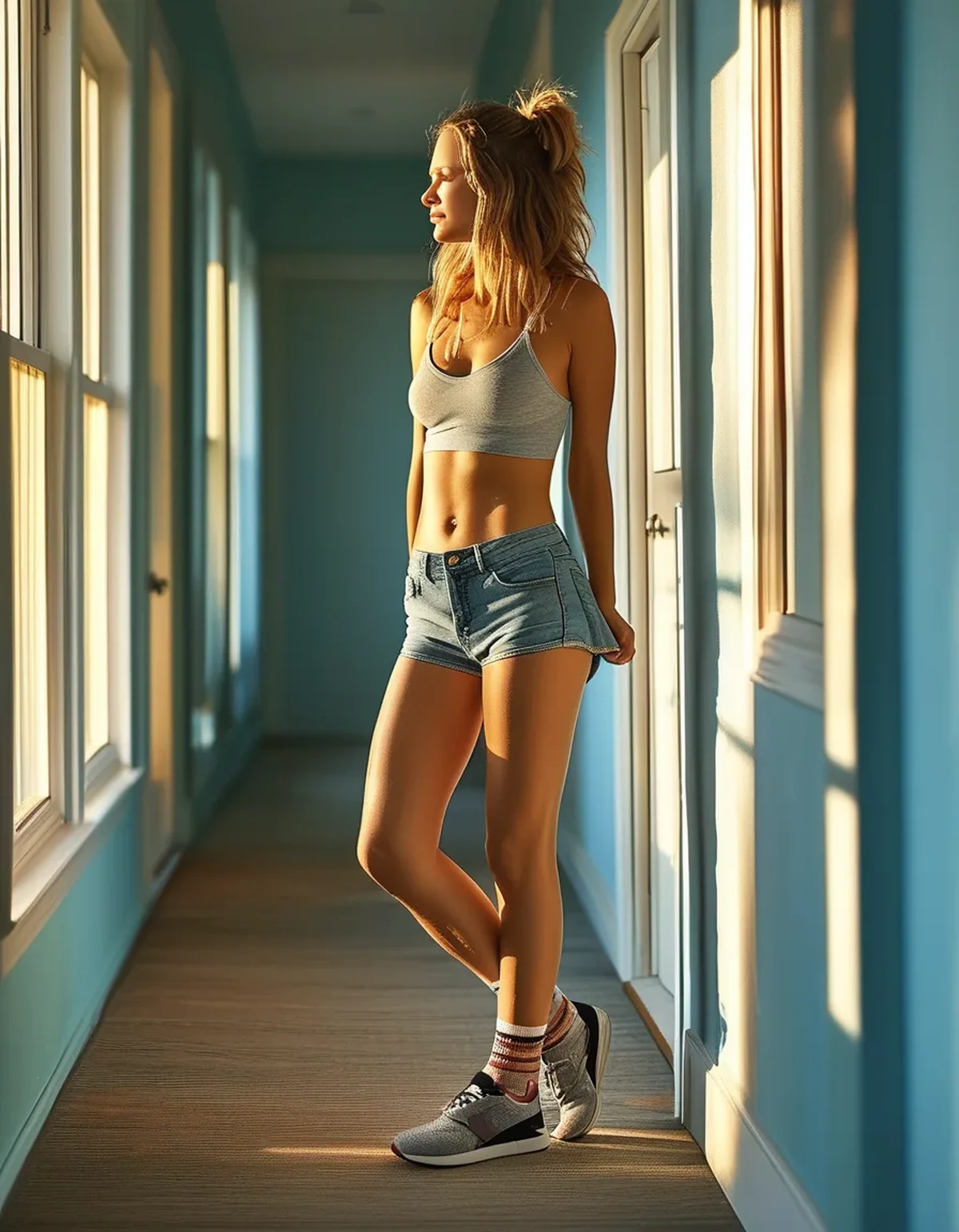
The overlap matters more than the height. A crew sock worn under the legging hem leaves the same gap as a low sock. Sock outside, legging inside — or the reverse if you want the legging over the sock, as long as they actually meet with margin.
The other reliable option is a sock in a color that reads as continuous with the legging. Black on black closes the visual gap even when the physical overlap is small.
Does a heavier fabric in the same length help?
More than you’d expect, and this is the option people skip because they assume length is the only variable.
Summer ankle-length leggings are typically in a light, breathable knit around 180 to 220 gsm — designed to move air. A brushed or fleece-lined pair in the same cut can run 280 to 350 gsm, and the difference in how the whole leg feels is significant even though the ankle is exposed identically.
Why: most of your leg heat loss is happening over the large surface area of thigh and calf, not the small area of ankle. Insulate the large area and the small exposed one stops mattering as much. Your body has more heat to spare.
So the fall version of the same outfit is: same length, heavier fabric, crew sock. You keep the proportion you liked and lose the problem. A brushed-interior pair also handles the specific misery of a cold waistband on a windy morning, which is the other thing summer leggings don’t solve.
5 Mistakes Everyone Makes Going into Fall
1. Sizing up to get length. A longer legging in a bigger size fits worse everywhere else — the waistband gaps, the crotch drops, and now you have a full-length pair that pools at the ankle. Length and size are different problems.
2. Wearing the summer pair with boots. Ankle-length plus a mid-calf boot creates a gap that’s both cold and awkward, because the legging hem sits inside the boot shaft with nothing bridging it. Either go full length under boots or wear a tall sock that shows deliberately above the boot line.
3. Treating the gap as purely visual. People try to fix it with styling when the actual complaint is temperature. If you’re cold, styling won’t help.
4. Assuming fleece-lined means bulky. Modern brushed interiors add very little thickness — the loft is on the inside face. A brushed pair often measures within a millimeter of a summer pair.
5. Keeping the exact same rotation into October. This is the one that quietly costs the most. The pairs that were perfect in July aren’t wrong, they’re just seasonal, and the fifth mistake is refusing to admit that a wardrobe has seasons.
How do you make the gap look intentional instead?
Sometimes you don’t want to cover it. The cropped ankle is a proportion that works — it lengthens the leg line and it’s why the length got popular in the first place.
To keep it and stay warm, move the layering up. A longer top layer — a tunic, an oversized zip, a long cardigan that hits mid-thigh — raises your overall warmth enough that the ankle reads as a deliberate contrast rather than an oversight. The visual logic works too: heavy on top, light at the ankle, is a coherent look. Light on top and light at the ankle just looks like you dressed for the wrong day.
The other move is a visible statement sock. A ribbed sock in a contrasting color, scrunched slightly, deliberately breaking the line. It solves the temperature problem and turns the gap into a styling choice, and it’s one of the few genuinely warm options that doesn’t require a different legging.
What doesn’t work: a thin no-show sock with a cropped legging and a cropped top on a 55°F morning. There’s no version of that outfit where you aren’t cold, and no amount of styling changes it.
TL;DR:
- Ankles lose heat fast because there’s almost no insulating tissue and vessels sit near the surface.
- Cold ankles make your whole leg feel cold — thermal comfort tracks your coldest point.
- Close the gap with a crew sock overlapping the hem by an inch, not a quarter sock with no margin.
- A heavier or brushed pair in the same length fixes more than switching to full length does.
- To keep the cropped look, layer longer on top and treat the sock as a visible choice.
You don’t have to retire the length you like. You have to stop pairing it with the socks you wore in July.
See It in Motion
Seen here: Super High Waist Embossed Yoga Leggings with Inner Pocket — shop it on bubblelime.com
Keep Reading
This article is for general informational and styling purposes only. Fit, sizing, and product availability may vary.