Ankle-Length Leggings Are the Best Transitional-Weather Length - Here Is Why
Quick Answer: Ankle-length leggings hit at or just above the ankle bone, which leaves the ankle exposed for heat release while covering the calf. That combination handles a 10-degree swing between a cool morning and a warm afternoon better than either full-length or cropped, and it pairs with both trainers and boots without bunching or gaping.
Late August into September is the hardest dressing window of the year. One length solves more of it than any other.
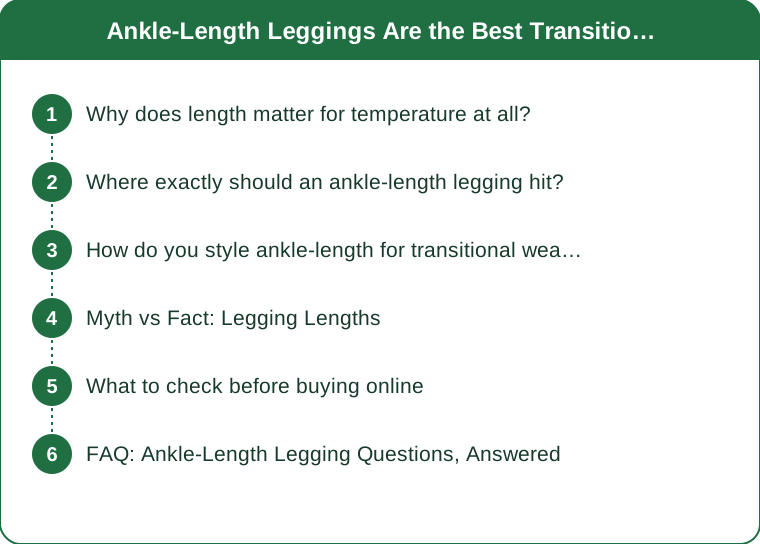
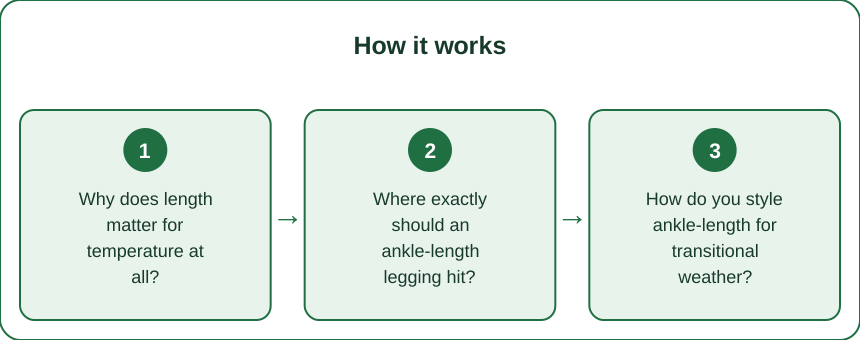
Why does length matter for temperature at all?
Because your ankles and wrists are where heat leaves most efficiently.
The skin over the ankle sits close to the surface with relatively little insulating tissue over the blood vessels beneath, which makes it one of the areas where the body regulates temperature effectively. Uncovering or covering the ankle produces a disproportionate change in how warm you feel relative to how much fabric is involved.
That’s the whole mechanism behind why ankle-length works in transitional weather. You get the calf coverage that matters for a 12C morning, and an exposed ankle that lets you dump heat when it hits 24C by afternoon.
Full-length leggings that stack over the ankle bone remove that release valve entirely. Cropped and 7/8 lengths that sit mid-calf remove the coverage. Ankle-length sits precisely at the useful boundary, which is why it stops feeling like a compromise and starts feeling like the correct answer somewhere in early September.
Where exactly should an ankle-length legging hit?
At or just above the ankle bone - the lateral malleolus - with no fabric stacking above the shoe.
The visual test: standing in trainers, you should see a small gap of skin or sock between the hem and the shoe. Roughly 2-4cm is the sweet spot for most people.
Common failures and what they mean:
- Fabric pooling on top of the shoe: the legging is full-length on you, not ankle-length. Sizing charts describe an intended length on a standard height, which is why the same style reads differently at 158cm and 175cm.
- Hem sitting mid-calf: that’s a 7/8 or cropped length. Fine in warm weather, cold on a September morning.
- Hem riding up during movement: the leg opening is too loose or the fabric lacks recovery. This is a fit problem rather than a length one.
Height is the variable brands can’t accommodate. If you’re above about 175cm, ankle-length in most standard ranges will read as 7/8 on you, and a tall size or a full-length style is a better bet.
How do you style ankle-length for transitional weather?
The length is versatile precisely because it works with both warm-weather and cool-weather footwear.
With trainers: the classic pairing, and the one that needs the least thought. A no-show sock keeps the ankle line clean; a visible crew sock is a deliberate style choice that also adds warmth on cooler mornings.
With ankle boots: the hem should sit just above the boot shaft, not tucked inside it and not bunched at the top. This is where ankle-length outperforms full-length decisively - full-length bunches inside a boot and creates pressure points.
With loafers or flats: works well and reads more polished. Bare ankle rather than sock, and this pairing carries an athleisure outfit further into non-gym contexts than trainers do.
Layering above: the exposed ankle balances a longer top. If you’re wearing an oversized jumper or a longline jacket, ankle-length keeps the proportions from reading as heavy, because the visible leg line is uninterrupted from knee to shoe.
Myth vs Fact: Legging Lengths
Myth: Ankle-length is just a shorter full-length. Fact: They’re graded differently. Ankle-length styles usually have a slightly narrower leg opening designed to sit at the ankle rather than stack, which is why hemming a full-length pair doesn’t produce the same result.
Myth: The length is determined by the brand’s label. Fact: It’s determined by your height and inseam. The same labelled length varies by several centimetres across brands, and by more than that across body heights.
Myth: Exposed ankles in autumn will make you cold. Fact: In genuinely cold weather, yes - cover them. In transitional 12-22C weather, the ankle exposure is what makes a single outfit work across a 10-degree day.
Myth: You can’t wear ankle-length with boots. Fact: Ankle boots are the best pairing available, and the reason is that the hem clears the boot shaft cleanly. Tall boots are where full-length wins.
Myth: Cropped, 7/8, and ankle-length are basically the same. Fact: They’re roughly 6-10cm apart, which is the difference between a covered calf and an exposed one - and in September that’s the difference between comfortable and cold.
What to check before buying online
Length is the hardest attribute to judge from a product photo, so use numbers instead.
Find the inseam measurement, not the style name. Most brands list it, often in the size-and-fit tab. Ankle-length typically runs around 68-73cm inseam for standard heights.
Measure a pair you already own that hits where you want. Lie them flat and measure from crotch seam to hem. That number is more reliable than any description and travels between brands.
Check the model’s height in the product photo. Many brands list it. If the model is 178cm and you’re 162cm, what looks ankle-length on her will hit lower on you.
Check the leg opening width if it’s listed. A wider opening at ankle length tends to flap and ride; a narrower one stays put.
And note that fabric weight changes how a length wears. A heavier, more compressive fabric holds its position; a light, drapier one migrates upward through a day of movement, which effectively shortens it.
FAQ: Ankle-Length Legging Questions, Answered
What’s the difference between 7/8 and ankle-length?
7/8 typically sits above the ankle bone, often mid to lower calf. Ankle-length sits at or just above the ankle bone. It’s roughly a 5-8cm difference and it matters in cool weather.
Can I hem full-length leggings to ankle-length?
You can, but the leg opening will be wider than a purpose-made ankle-length, so expect a looser fit at the hem. Use a stretch stitch or a coverstitch if you do.
Does ankle-length work in winter?
With tall boots or over a base layer, yes. On its own in cold weather, the exposed ankle works against you.
Which length is most flattering?
Ankle-length tends to read as the longest leg line because it’s uninterrupted to the shoe without stacking. But height and proportion vary - the one that doesn’t bunch on you is the one that looks best.
TL;DR:
- Ankle exposure is a genuine heat-release point, which is why the length handles a 10-degree day
- Aim for a hem at or just above the ankle bone with 2-4cm of visible skin or sock above the shoe
- Best pairing is ankle boots - the hem clears the shaft where full-length would bunch
- Buy by inseam measurement, not by the style name; check the model’s height
- Heavier fabrics hold their length; light ones migrate upward through the day
The reason it feels right in September isn’t fashion. It’s thermoregulation with a good hemline.
See It in Motion
Seen here: High Waist Yoga Leggings with Side Pockets — shop it on bubblelime.com
Keep Reading
This article is for general informational and styling purposes only. Fit, sizing, and product availability may vary.