Why Ankle-Length Leggings Creep Up Your Calf and How to Stop It
Quick Answer: Ankle-length leggings creep upward when the hem has no grip and the fabric above it has more stretch than recovery. The three causes are a plain unfinished hem with no elastic or rib, a fabric that has lost elastane recovery through heat damage, and a sock or shoe collar that catches the hem on each step. A hem with a rib or elastic band, and a low-cut sock, solves most cases.
You bought them for the exact hem placement. Six minutes into a walk they are at mid-calf, and you spend the rest of the session pulling them down.

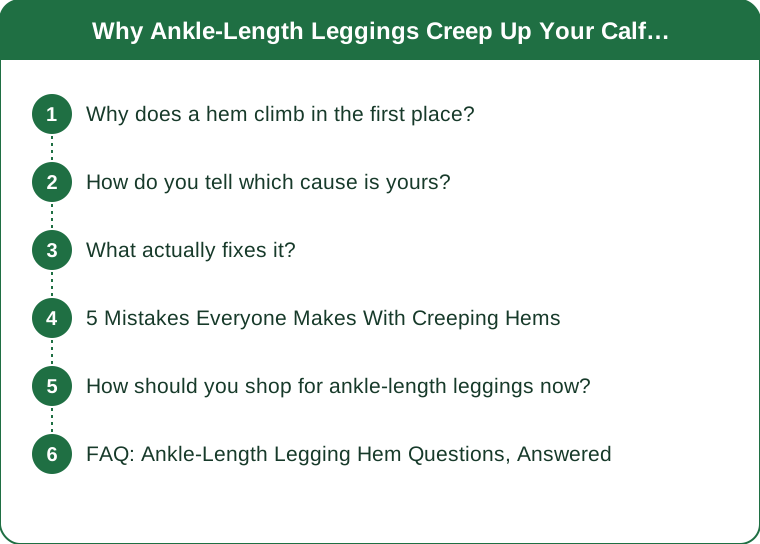
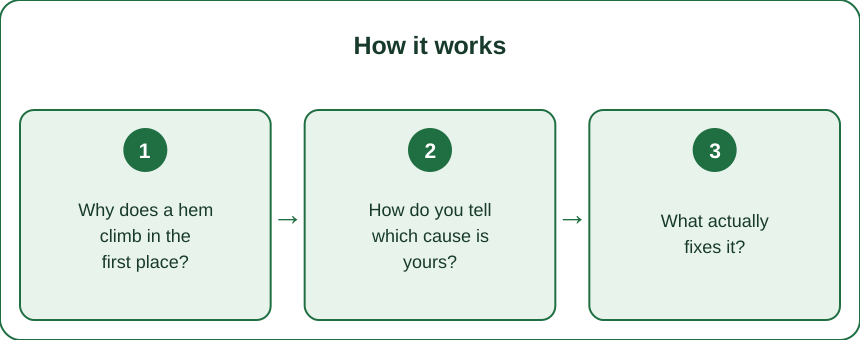
Why does a hem climb in the first place?
Because a legging hem has nothing holding it in place except friction, and friction is losing to two forces.
Force one - your calf. Each stride the calf muscle contracts and its circumference increases. Fabric sitting on the calf is pushed slightly upward each time. Repeated a few thousand times, and small becomes obvious.
Force two - the sock and shoe. The collar of a mid or crew sock, or the padded collar of a trainer, catches the hem edge and drags it up on each ankle flexion. This is the cause people almost never suspect and it is frequently the main one.
What resists those forces is:
- Grip at the hem - a rib, an elastic band, or a silicone strip
- Fabric recovery - the fabric’s ability to snap back rather than progressively lengthening
- A hem sitting somewhere it can grip - the narrowest point above the ankle bone rather than on the calf slope
When a legging creeps, at least one of those three is missing. The length itself is almost never the problem, which is why sizing down or buying a longer pair rarely fixes it.
How do you tell which cause is yours?
Three quick tests, each about thirty seconds.
Test 1 - the hem grip test. Look at the hem edge. Is it a plain coverstitched edge, a rib knit cuff, or an elasticated band? A plain flat hem on a smooth fabric has almost no grip. Rib cuffs and internal elastic hold position substantially better. If your creeping pair has a plain hem and your reliable pair has a rib, you have your answer.
Test 2 - the recovery test. Stretch a section of the fabric near the ankle firmly, hold five seconds, release. Does it snap back immediately, or does it stay slightly baggy for a moment? Sluggish recovery means the elastane is degraded, usually from tumble drying, hot washing, or fabric softener. Degraded fabric lengthens under load and stays there - that pair will creep no matter what socks you wear.
Test 3 - the sock test. Wear the same leggings with a low-cut no-show sock and repeat the walk that usually causes creeping. If it stops or halves, the sock collar was catching the hem. This is genuinely common and is the easiest fix on the list.
A fourth clue: if it creeps on only one leg, look at your gait and your shoes rather than the leggings. A worn shoe or a slightly different stride on one side will do exactly this.
What actually fixes it?
In order of how likely each is to work.
Switch to low-cut socks with ankle-length leggings. No-show or low-cut socks remove the catch point entirely. If you want visible socks, choose a thin flat-knit rather than a ribbed sports collar - it is the ribbing that grips the hem.
Buy hems with structure. For your next pair, look specifically for a rib knit cuff, an internal elastic band, or silicone grip dots at the hem. Brands that make cycling or running tights use these routinely; general activewear often does not.
Retire fabric with dead recovery. If the stretch test showed sluggish return, that pair is finished for this purpose. It will still work as loungewear. Prevent it in the next pair: cold wash, no fabric softener, no tumble dryer, dry away from direct heat and sun. Heat is what kills elastane.
Move the hem to a narrower point. If the hem sits on the calf slope, it will always be pushed upward. A pair that ends at or just above the ankle bone - the narrowest part - has a shelf to sit on. Petite frames often need a genuinely shorter length rather than the same pair worn higher.
Check your shoe collar. A high, heavily padded trainer collar catches hems. A lower-collar shoe frequently solves it on its own.
What does not work: sizing down, which increases upward tension on the fabric; and pulling them down mid-session, which stretches the hem and makes the next mile worse.

5 Mistakes Everyone Makes With Creeping Hems
Mistake 1: Blaming the length. People buy a longer pair and get the same result, because the creep mechanism is grip and recovery, not inches. A full-length pair with a plain hem creeps too - it just starts from lower down.
Mistake 2: Sizing down to make them tighter. A tighter legging has more upward force in the fabric column, not less. Sizing down reliably makes creeping worse and adds sheerness at the same time.
Mistake 3: Tumble drying activewear. This is the biggest recovery killer, and the damage is cumulative and invisible until the garment stops holding position. Air drying is the single best habit for keeping hems where they belong.
Mistake 4: Ignoring the sock. The third mistake is the most damaging long-term, but this one is the most commonly missed - a ribbed crew sock collar under a plain legging hem is a mechanical ratchet, dragging the hem up a few millimetres per stride.
Mistake 5: Yanking them down mid-session. Every pull stretches the hem circumference slightly, and the hem is the part relying on being marginally narrower than your calf. Three sessions of yanking and the hem is permanently wider, which guarantees creeping from then on.
How should you shop for ankle-length leggings now?
Four things to check, all visible in a product photo or a thirty-second in-store inspection.
Look at the hem construction first. Rib cuff, elastic band, or silicone grip. If the listing photo shows a plain flat hem on a smooth fabric, expect creeping unless you wear low socks.
Check the elastane percentage and the care label. 12 to 22 percent elastane with a cold-wash, no-tumble-dry instruction is a good sign. Very low elastane means little recovery to begin with.
Check the stated inseam against your own measurement. Ankle length is a description, not a number - it varies by several centimetres between brands. Measure the inseam on a pair that sits correctly on you and shop to that number instead.
Look for a slightly tapered leg. A taper means the fabric near the hem is narrower than the calf, which gives it something to grip. A straight leg has nothing to hold onto.
And test them properly before the return window closes: walk for five minutes, then do ten calf raises, then check where the hem is. Standing still in a fitting room tells you nothing about creeping, which is entirely a movement problem.
FAQ: Ankle-Length Legging Hem Questions, Answered
Do silicone grip hems irritate the skin?
Most people do not notice them, though a few find grip dots itchy against bare skin in heat. If you are sensitive, a rib knit cuff gives similar hold without the coating.
Will hemming a full-length pair shorter fix creeping?
Only if the new hem lands at a narrower point and is finished with something that grips. A shortened plain hem creeps the same way. A tailor can add an elastic band inside the hem, which is inexpensive and effective.
Is creeping a sign of poor quality?
Not always - it can simply be a hem design intended to sit at full length. It is a reliable sign of low quality when it appears in a pair that used to stay put, because that means the elastane has degraded.
Why do my cycling tights never creep?
Because cycling and running tights almost always have gripper elastic or silicone at the hem, since the sport makes hem migration unacceptable. It is a design choice general activewear often skips, not a fabric difference.
TL;DR:
- Creeping is caused by hem grip, fabric recovery, and sock or shoe collars - not by length
- Test the hem type, do a five-second stretch-recovery check, then try low-cut socks
- Rib cuffs, internal elastic, and silicone grip hems hold position; plain flat hems do not
- Tumble drying and fabric softener kill the recovery that keeps a hem in place
- Sizing down and yanking them down mid-session both make it permanently worse
The fix here is unusually cheap. Change your socks, air dry the pair you have, and buy hems with structure next time - and the pull-them-down habit disappears in a week.
See It in Motion
Seen here: High Waist 8” Yoga Shorts — shop similar styles on bubblelime.com
Keep Reading
This article is for general informational and styling purposes only. Fit, sizing, and product availability may vary.