Ankle-Length Leggings with Boots: Where the Hem Should Land
Quick Answer: Ankle-length leggings work with boots when the hem either tucks fully inside the shaft or ends at least 3cm above the boot’s top edge. The combination to avoid is a hem that sits exactly at the boot line or bunches just above it - that creates a horizontal break at the widest point of the calf and visually shortens the leg. Tuck or clear it; never let it meet.
The leggings-and-boots question isn’t about the boots. It’s about a two-centimetre decision at the ankle that changes the whole proportion.

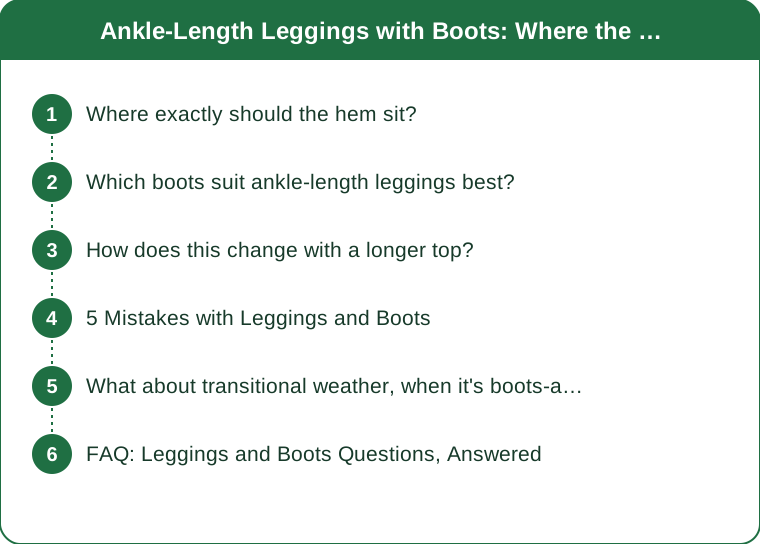
Where exactly should the hem sit?
There are only two correct positions, and everything else is a compromise.
Position 1: fully tucked. The legging goes inside the boot shaft with no bunching visible at the top. This works with any boot that has a shaft above the ankle bone and is the safest option with tall boots.
Position 2: cleanly above. The hem ends at least 3cm above the boot’s top edge, showing a deliberate strip of ankle or sock. This works best with low ankle boots and Chelsea boots.
The failure position: the hem landing within a centimetre or two of the boot’s top edge, or worse, resting on it and bunching. This does three things at once - it creates a fabric wrinkle exactly at the widest calf point, it produces a horizontal line that cuts the leg, and it looks accidental rather than chosen.
Why it matters more with ankle-length than full-length: 7/8 leggings are cut to end above the ankle bone, which is precisely where most ankle boot shafts also end. The two are competing for the same three centimetres. Full-length leggings tuck without thinking about it; ankle-length ones need the decision made deliberately.
Which boots suit ankle-length leggings best?
Ranked by how forgiving they are, which is a more useful ordering than by trend.
Easiest: Chelsea boots and low ankle boots. The shaft ends below the point where a 7/8 legging finishes, so you get clean separation without effort. This is why the combination looks effortless on other people - it genuinely is.
Also easy: tall boots and knee-high boots. The legging disappears entirely inside. No decision required, no hem visible, and 7/8 length is actually an advantage because there’s less fabric to bunch inside the shaft.
Trickiest: mid-shaft and combat boots that end right at the ankle bone. These land in exactly the contested zone. If you love them, cuff the legging slightly higher or choose a pair cut shorter.
Also worth knowing: sock height changes everything with low boots. A visible sock above a low boot creates a deliberate colour block that reads as styled. A hidden sock leaves bare ankle, which is cleaner. A sock that peeks by half a centimetre reads as an accident - go visible or go hidden, not in between.
As the weather cools, the visible-sock version becomes the more practical choice, and a ribbed sock in a colour that relates to the boot rather than the legging looks most intentional.
How does this change with a longer top?
Substantially, because a longer top removes the leg-shortening risk and changes what the hem needs to do.
With a cropped or hip-length top, the leg is fully visible from waist to boot and proportion matters most. The 3cm gap rule applies strictly.
With a mid-thigh top - a long jumper, an oversized shirt, a tunic - the visible leg is already shorter, so a horizontal break at the ankle matters far less. This is the situation where a slightly bunched hem is forgivable.
With a knee-length coat or long cardigan, the visible leg segment is short enough that most people should prioritise warmth and comfort over the hem rule entirely.
The general proportion principle: the shorter the visible leg, the more the ankle break matters. It’s the ratio between the exposed leg and the break point that your eye reads, not the absolute measurement.
One reliable autumn formula: oversized knit to mid-thigh, ankle-length leggings, low Chelsea boot with a visible ribbed sock. It works because the sock and boot create a deliberate two-tone block at the bottom, which balances the volume on top.

5 Mistakes with Leggings and Boots
1. Half-tucking. One leg in, one leg out, or a partial tuck that slides during the day. Commit fully to one position; a tuck that fails halfway through a walk is the least flattering version of any of these.
2. Choosing boots with a shaft that gapes. A boot shaft that’s noticeably wider than your calf leaves a visible gap with thin leggings inside, which looks unfinished. Boots are much easier to fit over leggings than over jeans - use the extra room rather than sizing up.
3. Wearing thin summer leggings into boot season. Lightweight 7/8 leggings under a boot in October means a cold ankle and a fabric that wrinkles more. Switch to a thicker or brushed pair as temperatures drop - it also solves the bunching problem, because thicker fabric holds its line better.
4. Ignoring the shoe-to-legging colour relationship. A black legging with a light boot creates a strong horizontal break; a tonal match extends the leg line. Neither is wrong, but the first one needs the 3cm gap much more than the second - this is the mistake that catches people who otherwise follow the rule.
5. Buying the same boots as someone with a different calf. Boot shaft height interacts with calf length, and a boot that hits below the widest point on one person hits at it on another. Judge it on your own leg in a mirror, from the side.
What about transitional weather, when it’s boots-and-bare-ankle?
The awkward stretch between summer and proper autumn is where this combination is most useful and most likely to go wrong.
When it’s still warm enough for a bare ankle:
- Low boot, no visible sock, 7/8 legging with a clean gap. This is the cleanest transitional look available and works from about 15C upward
- Keep the top lighter to match - a heavy knit with a bare ankle reads as mismatched seasons
When it’s cool but not cold:
- Add the visible sock, keep everything else the same. This one change moves the outfit a full season and costs nothing
- A ribbed or cable sock adds texture, which matters more as outfits get more monochrome in autumn
When it’s genuinely cold:
- Tall boots and a full tuck, or a thicker fleece-lined legging with the low boot and a proper wool sock
- Consider layering a thin legging under a thicker one rather than buying fleece-lined - it’s warmer and adjustable
The single most useful autumn upgrade is a set of thicker 7/8 leggings in the same cut you already like. Same silhouette, three more months of use.
FAQ: Leggings and Boots Questions, Answered
Can I wear ankle leggings with knee-high boots?
Yes, and it’s one of the easiest pairings - the leggings tuck fully and there’s no bunching because there’s less fabric than full-length.
What if my leggings ride up inside the boot?
This is a fabric grip issue. Leggings with a smoother finish slide less against boot lining than brushed ones. A thin knee-high sock over the legging fixes it completely.
Are leggings and boots still in style?
Yes, and the specific combination that dates an outfit isn’t the leggings - it’s usually the boot shape. Low Chelsea and clean ankle boots read current; the pointed slouchy shaft reads otherwise.
Should the legging match the boot colour?
Matching extends the leg line and is the safe choice. Contrast works well when the hem gap is clean and deliberate, and works badly when the hem sits at the boot edge.
TL;DR:
- Tuck the hem fully inside, or leave a clean 3cm gap above the boot - never let them meet
- Chelsea and low ankle boots are the most forgiving; mid-shaft boots are the hardest
- Show the sock deliberately or hide it completely; a half-centimetre peek reads as an accident
- The longer your top, the less the ankle break matters
- Switch to thicker 7/8 leggings for autumn - they hold their line better and solve bunching
The boots aren’t the variable. Three centimetres at the ankle is, and once you set it deliberately the outfit stops looking like it happened by accident.
See It in Motion
Seen here: Super High Waist Embossed Yoga Leggings with Inner Pocket — shop it on bubblelime.com
Keep Reading
This article is for general informational and styling purposes only. Fit, sizing, and product availability may vary.